Coding
2019 to 2026, in whatever language got an idea built: Scratch, GameMaker, Python, C#, Godot. None of it shipped anywhere; this is the closest thing to a changelog.
Learning
2019 Ads in a nutshell Scratch
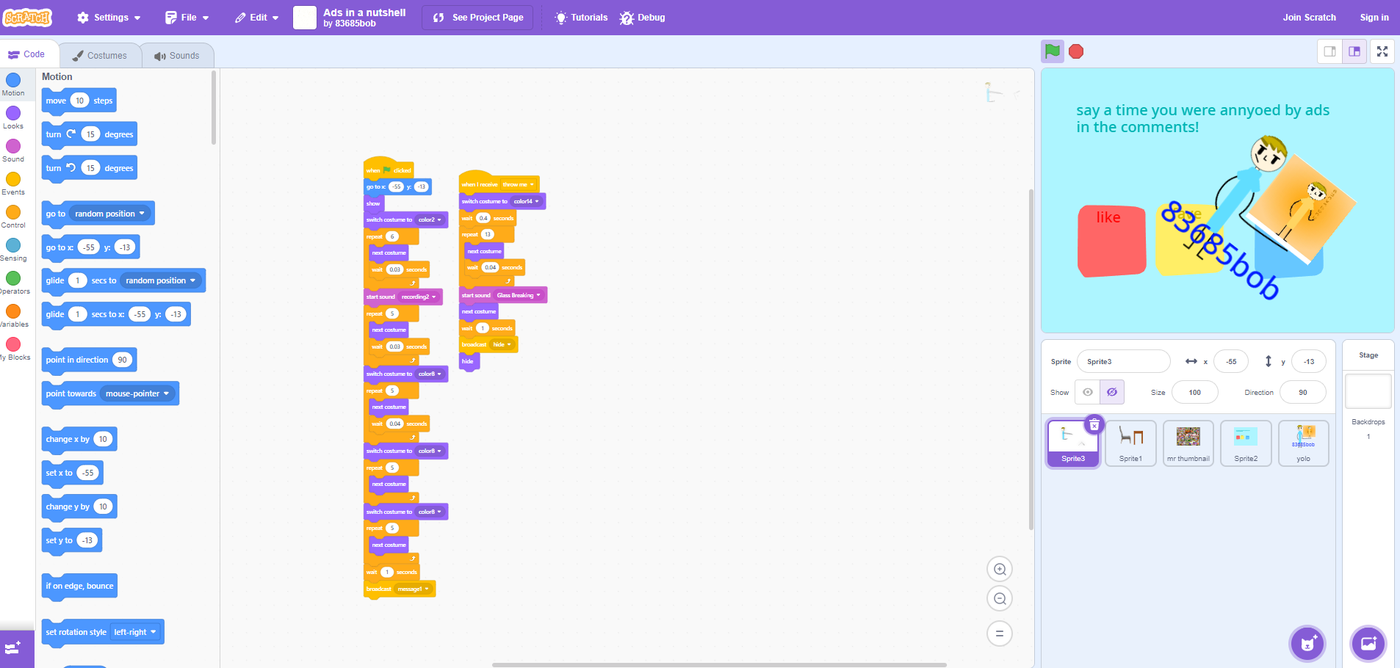
An animation built entirely from Scratch's block scripts: costume switches on timers, sound cues, broadcast messages between sprites. The first thing that ran on its own.
2019 Test cloud thing Scratch
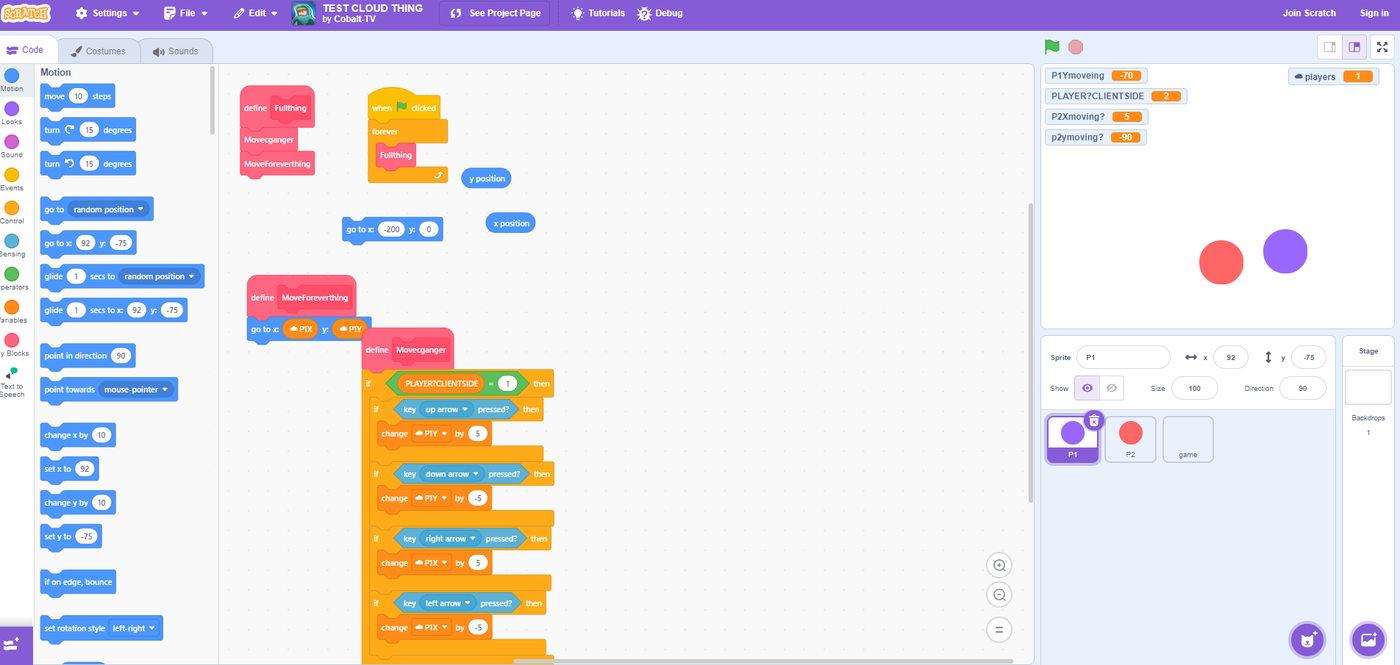
A two-player movement test using Scratch's cloud variables to sync position between two open tabs. A first, crude attempt at networking, before understanding what networking actually was.
2020 Character movement GameMaker Studio 2
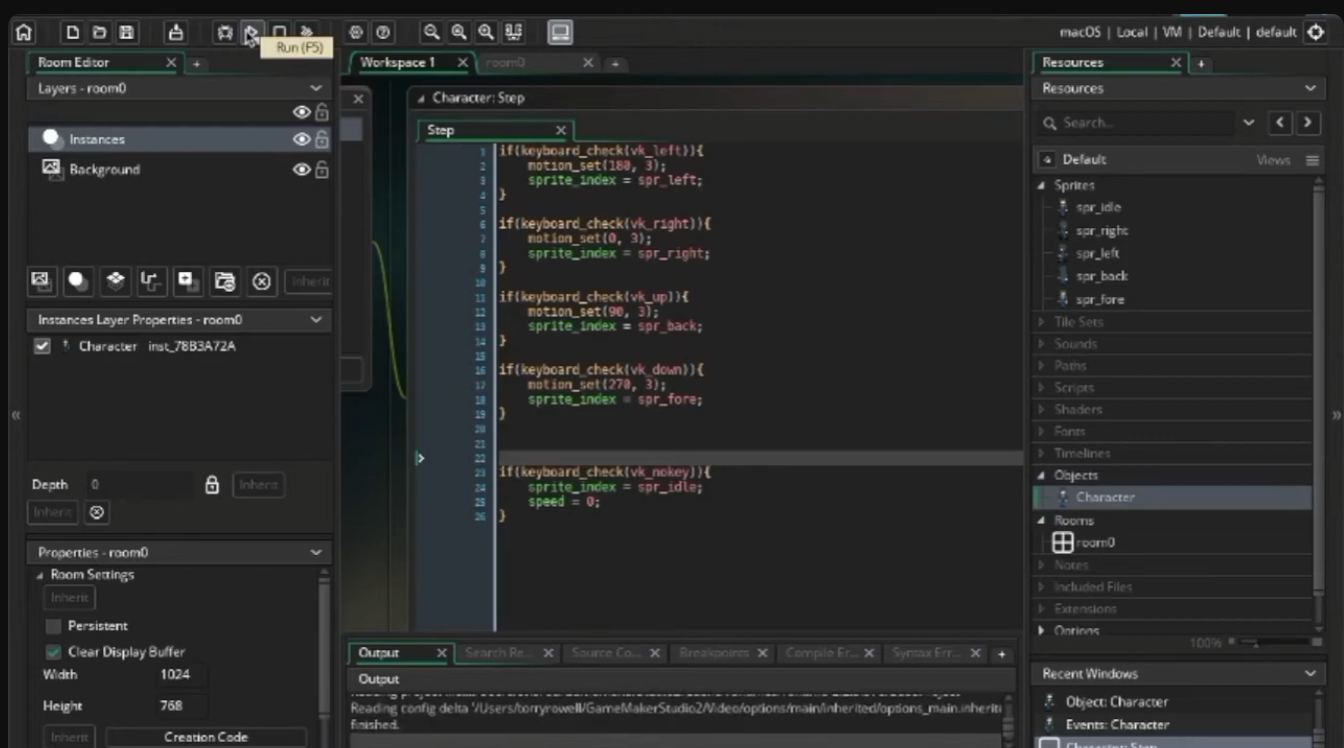
Four-directional movement in GameMaker's own language, GML: keyboard checks driving motion_set and a sprite swap for each direction. The first real typed scripting, after a year of dragging blocks.
Autoclickers, in Python
2022 Velocity Python
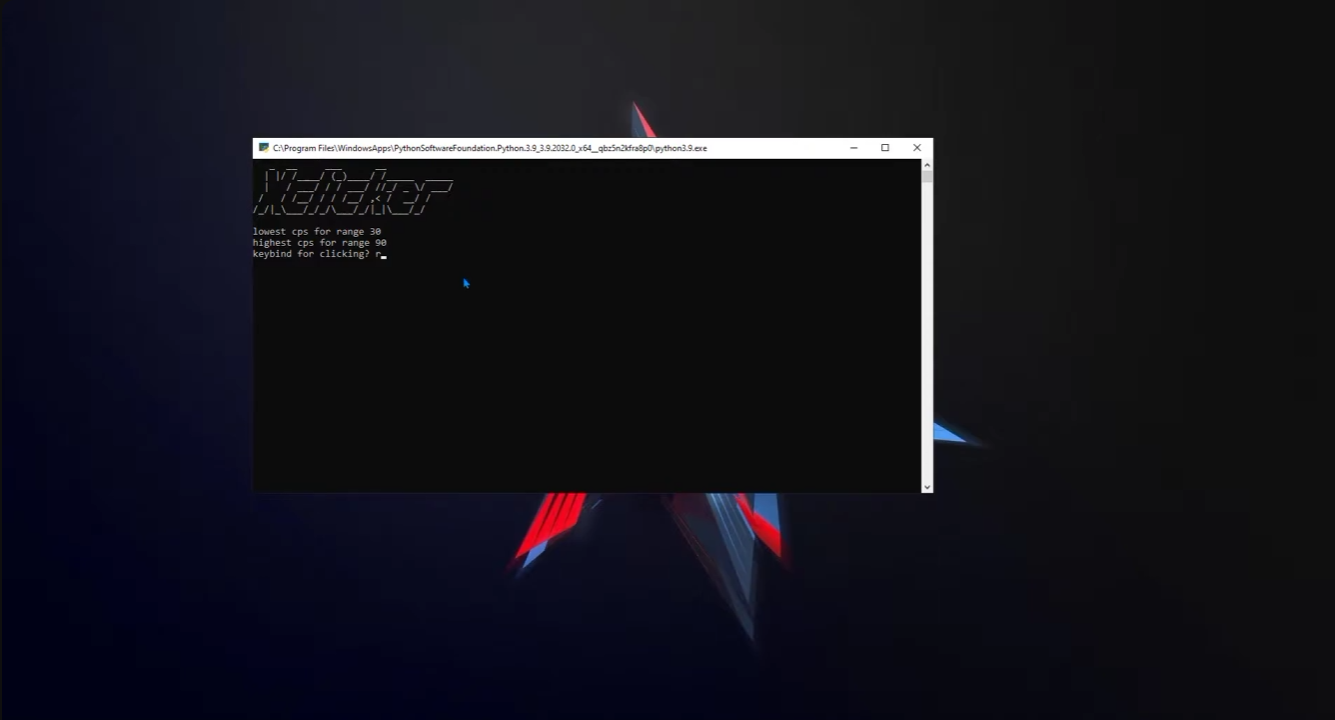
A console autoclicker: set a CPS range and a keybind, and it clicks somewhere inside that range instead of at one fixed rate. The first version of an idea I kept rebuilding.
2022 Helios Clicker Python
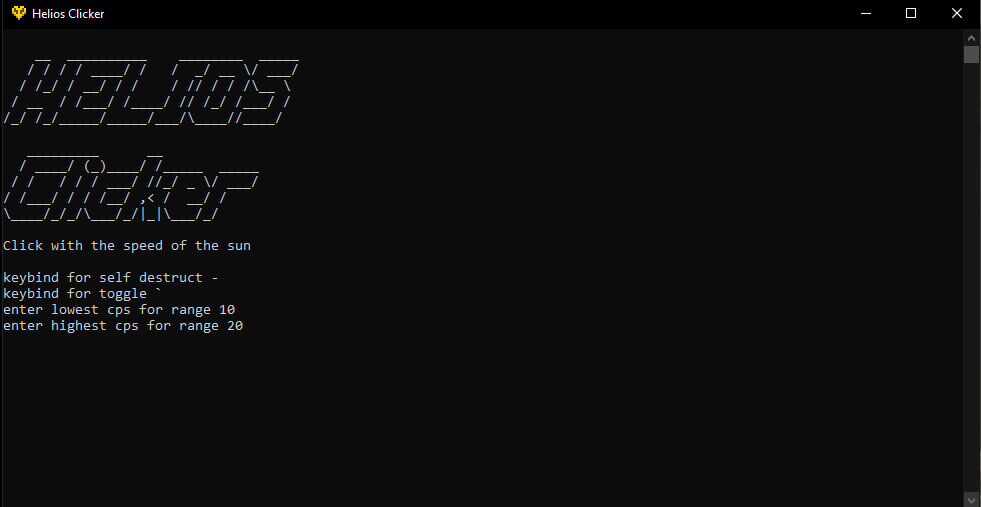
Same idea, rebuilt: separate keybinds, a wider CPS range, and an ASCII banner because I could. Small revisions between versions, not a rewrite from zero.
2022 Omen Python
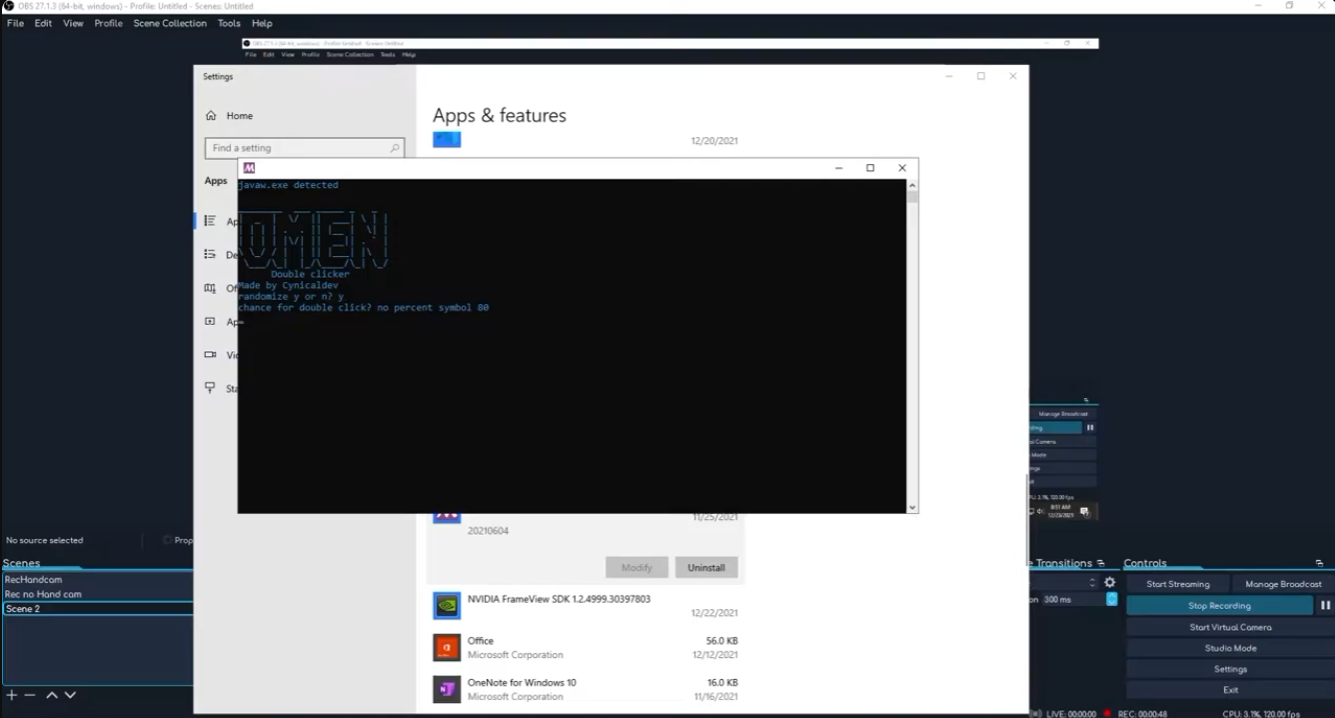
A double-clicker that checks for a running javaw.exe process before it does anything, so it only turns on alongside Minecraft. First time reading another process's state instead of just my own.
Desktop tools, in C#
2022 CyroWare C#
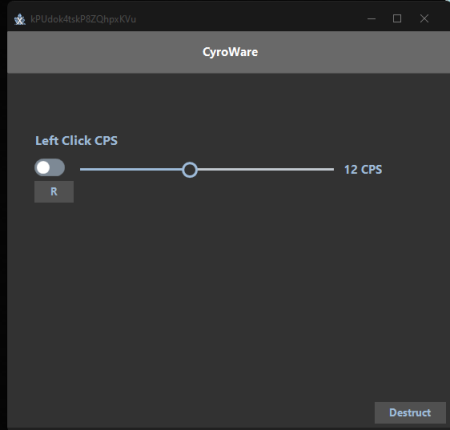
First real GUI instead of a console window: a toggle and a slider driving click speed, in C#. WPF instead of print statements.
2022 CyroWare, rebuilt C#
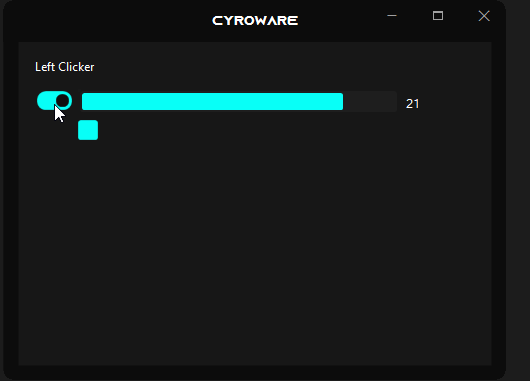
Same tool, revised: the slider became a progress bar and the layout got simpler. A small change, but it is the difference between a tool and a sketch of one.
2023 Finality C#
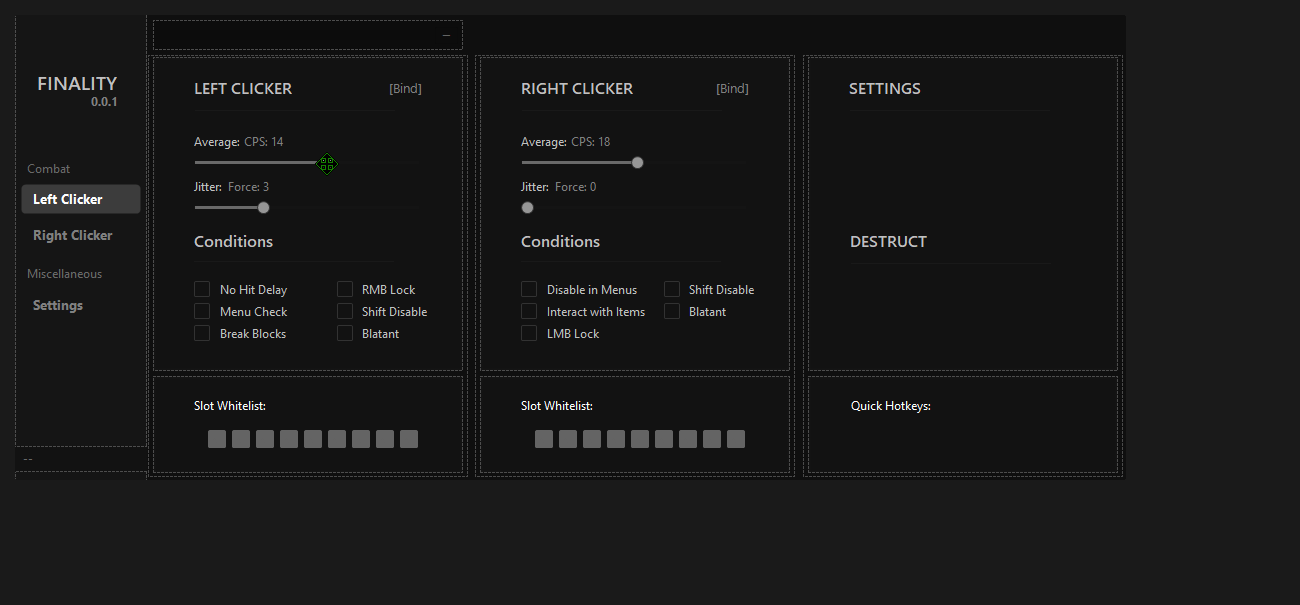
A combat clicker with per-click jitter instead of a fixed interval, plus a list of conditions - menu checks, hit delay, item slot whitelisting - that decide when it runs at all. The goal stopped being speed and started being behavior.
2024 Memory scanner C#
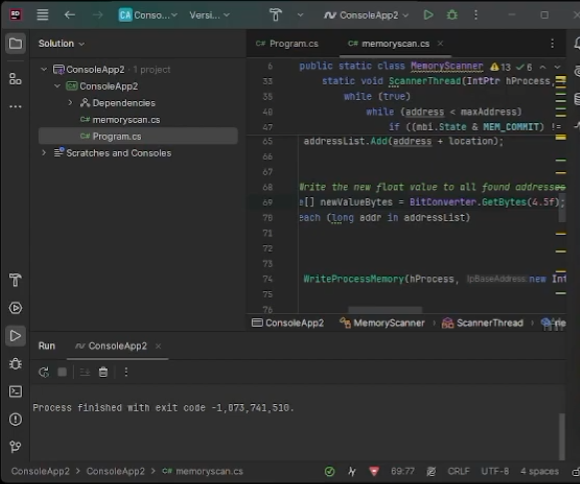
A memory scanner in C#: find every address in a running Minecraft process holding a given value, then write a new one to all of them. No more automating input, actually reading and editing what the game holds in memory.
Now
2025 A Souls-like Godot
Gameplay in the editor: real movement and combat instead of a tool that plays one. The shift from utilities into making something meant to be played, not run in the background.